Incline Our Hearts
Sent Out in Pairs
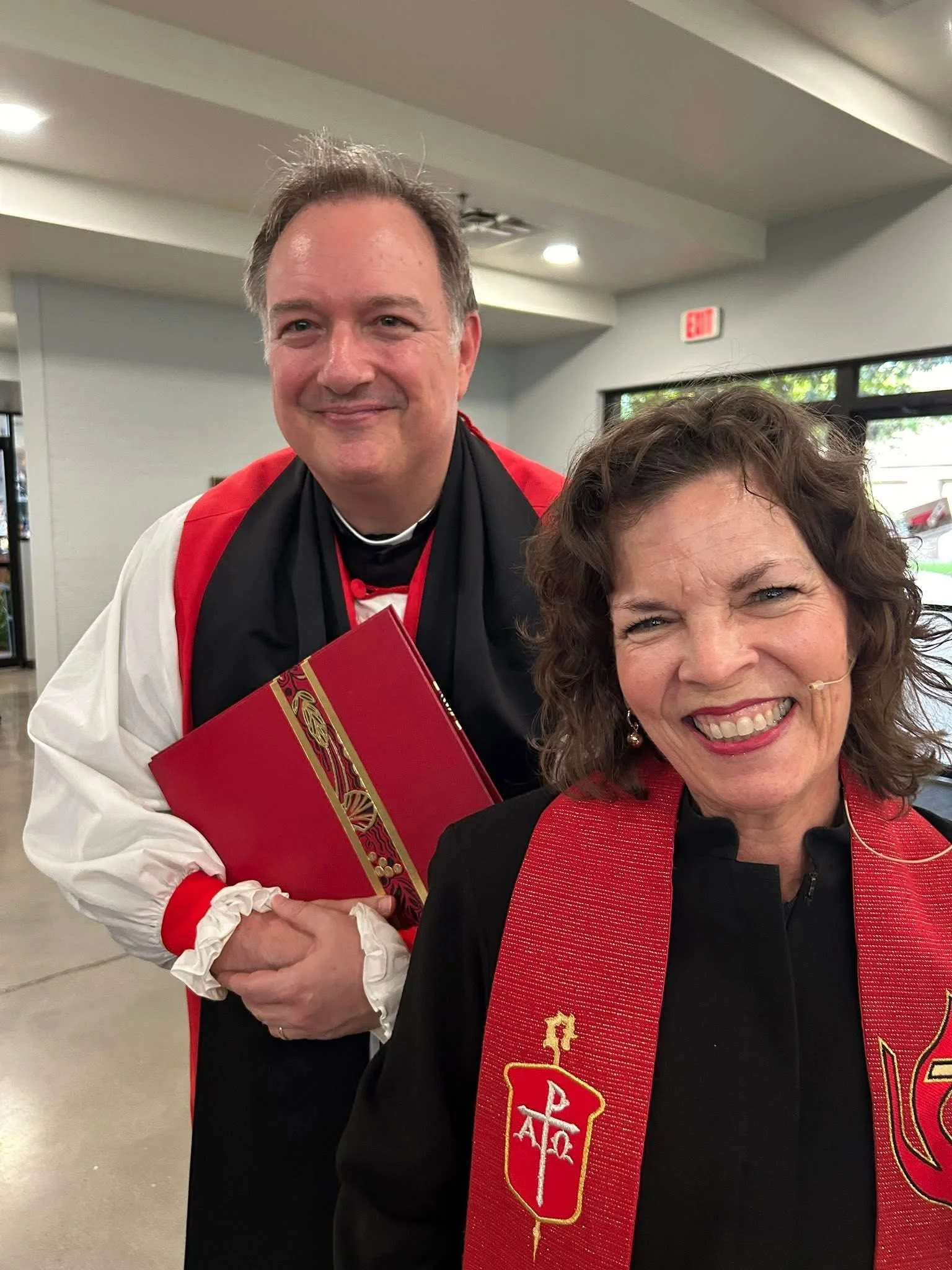
On May 29, I was honored to preach at the Service of Commissioning and Ordination of Elders and Deacons and Recognition of Licensed Local Pastors for the Oklahoma United Methodists, which took place as part of their Annual Conference (like our Diocesan Convention). This was at the invitation of Methodist Bishop Laura Merrill, and was the fruit of about nine months of a growing connection between the United Methodists and Episcopalians in Oklahoma. This relationship is not new, but it has been evolving. A number of our congregations have longstanding connections with local United Methodist congregations, and we have seen some Methodists joining Episcopal churches in the wake of the disaffiliation of approximately 25% of Methodist congregations nationwide from their denomination as part of a structured separation process that ended in 2023.
But the strengthening partnership on a denominational leadership level has been a more recent blessing. Canon Betsy and I have had several meetings with Bishop Merrill or her senior staff, and have found mutual excitement around ways to work together, especially in our smaller congregations. This connection between our denominations in Oklahoma is timely, because next summer, the Episcopal Church’s General Convention will consider a full communion relationship with the United Methodist Church, similar to what we have had for 25 years with the ELCA Lutherans. Such a full communion partnership would not be a merger, but would allow closer cooperation, for example, in certain circumstances, sharing clergy, ministries, or buildings. The United Methodists have already approved this, and talks are ongoing at the Churchwide level.
What were my impressions of the worship service on May 29? The Methodists’ warm welcome of me was extraordinary, not only during worship, but afterwards, when dozens of people came up to me to thank me for my sermon, and to express their enthusiasm for working together for the sake of the Gospel. In the liturgy itself, there were many similarities with our ordination rites in the Book of Common Prayer, and some notable differences. Something that was new to me that I greatly appreciated was an invitation for those seeking prayer to come forward to the altar, where a team of people were waiting to pray with them. It was especially meant for those feeling God’s call in their life in some new way. A number of people, including many young adults, came forward for this prayer. It was a spirit-filled experience.
As we discern closer partnership with the United Methodists, we ought not to do so out of concern for shrinking resources, nor should we deny that there are some significant differences between us. Instead, we should ask ourselves: in what ways can we fulfill Jesus’ call to share the Gospel more effectively together than apart? Jesus famously sent out his disciples in pairs. Is that a model for our two denominations? Friendship, encouragement, and the sharing of diverse gifts for the sake of God’s mission? In 1795, the Methodists separated from the Church of England (four years after John Wesley’s death). Perhaps God has a plan, after all these years, to call us to walk more closely together, as we long to fulfill Jesus’ prayer that all Christians be one, as he and the Father are one (John 17:21).