Incline Our Hearts
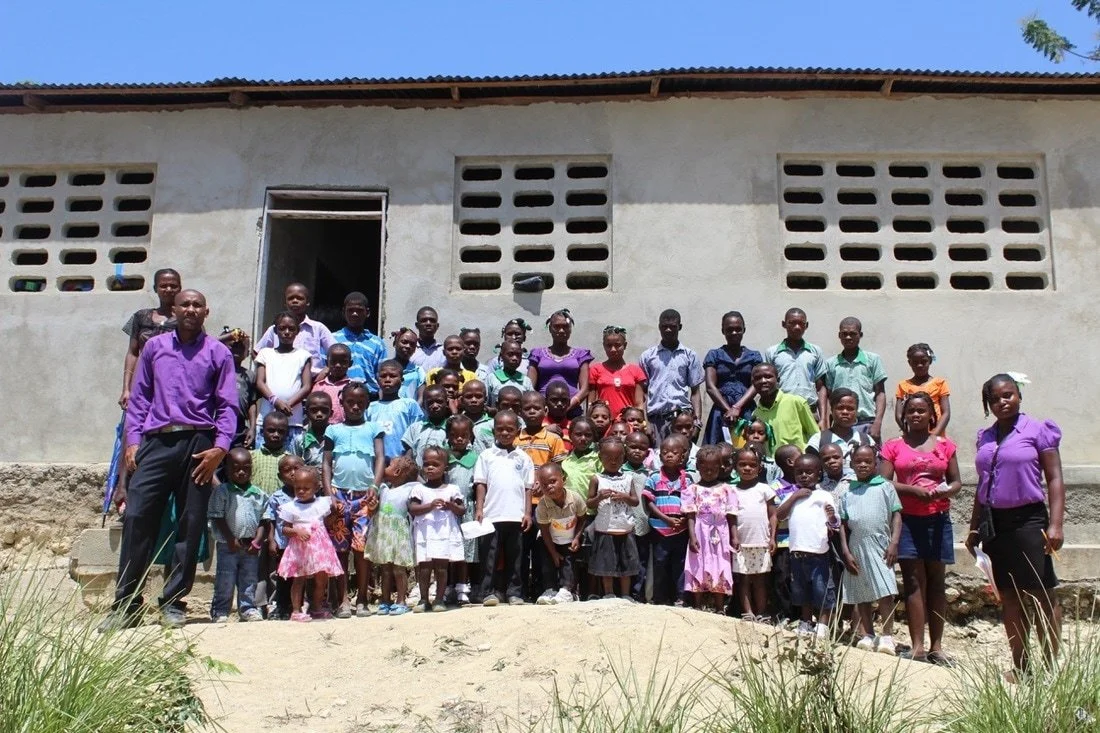
St. Paul’s School in Gascogne, Haiti
Temporary Protected Status: Complexity and Compassion
This week, Temporary Protected Status ended for over 300,000 Haitians living in the United States, as a result of the recent Supreme Court ruling allowing the Department of Homeland Security to do so with limited judicial review. This means that Haitians (and others) living in the United States under TPS may have their status ended and be deported, as DHS determines.
This situation hits close to home for me. When I was serving my last congregation, in Phoenix, my church and school had a partnership with a church and school in Haiti, as part of a program through the National Association of Episcopal Schools. We sent mission teams once a year (I went on two such trips), and with our Haitian friends built a new school building, improved the clean water supply, and helped pay the teachers a living wage. The Haitians who were our hosts were some of the kindest and most faithful people I have ever met. Sadly, Haiti descended into civil war and gang violence, making travel impossible in recent years. Haiti is now considered one of the most dangerous places in the world.
This new change in TPS status for Haitians in our country will do real harm not only to them, but to the United States. Haitians under TPS, here legally though without a path to citizenship, pay over 1.5 billion dollars annually in Federal, state, local and sales taxes, and many serve vital and hard to fill roles in health and home care.
In situations such as this, we are called, I believe, to a stance that appreciates complexity and shows compassion. First, complexity. Our broken partisan politics leave little room for seeing complexity or nuance in anything. Many Democrats see in the efforts to limit TPS pure racism and xenophobia, while Republicans see a gaming of the system and a stretching of the concept of “temporary” to its breaking point (TPS status for Haitians has been in place since the devastating earthquake of 2010 - over 16 years).
In the case of TPS, a balanced perspective would concede that this 1990’s program, designed by Congress to give temporary protection in increments of 6, 12, or 18 months to those fleeing natural disaster or violence, is being used in ways beyond its original intent. And such a balanced perspective ought also to acknowledge that simply deporting 300,000 Haitians to a country still plagued by violence in which some of these Haitians have never even lived would be a horrific humanitarian disaster (not to mention unjust, given the culpability of the United States in much of Haiti’s political and economic instability over the centuries).
Which is where compassion comes in. Through compassion, we can see beyond limited partisan lenses to deeper and more complex realities. TPS and our asylum, refugee, and immigration systems as a whole are broken and in desperate need of an overhaul. They are inadequate to the challenges of the present day, failing both immigrants and our national interest.
But as we advocate for a more common sense and fairer system, our compassion asks that we begin not with cold logic but with warm hearted love. The Good Samaritan in the famous parable did not ask the injured man for his paperwork, or for an explanation of what he was up to on his journey. He saw a fellow human being, a stranger, injured on the road, and stopped to help him, out of compassion. Our Haitian brothers and sisters in the United States need our help. Their lives are at stake. Let’s find it in our hearts to show compassion, even as we seek to reform a system that is insufficient for the complexities of our modern world.
Blessings,
Bishop Poulson