Incline Our Hearts
Joined and Knitted Together
Back in the early summer, I wrote about my experience of being invited to preach at the annual gathering of the Oklahoma United Methodists. With the Episcopal Church’s General Convention this coming July considering a full communion relationship with the United Methodists (as we have with the ELCA Lutherans), we are making efforts in Oklahoma to get to know our local Methodists better, considering how we might cooperate in Christian friendship for the purpose of furthering the Gospel.
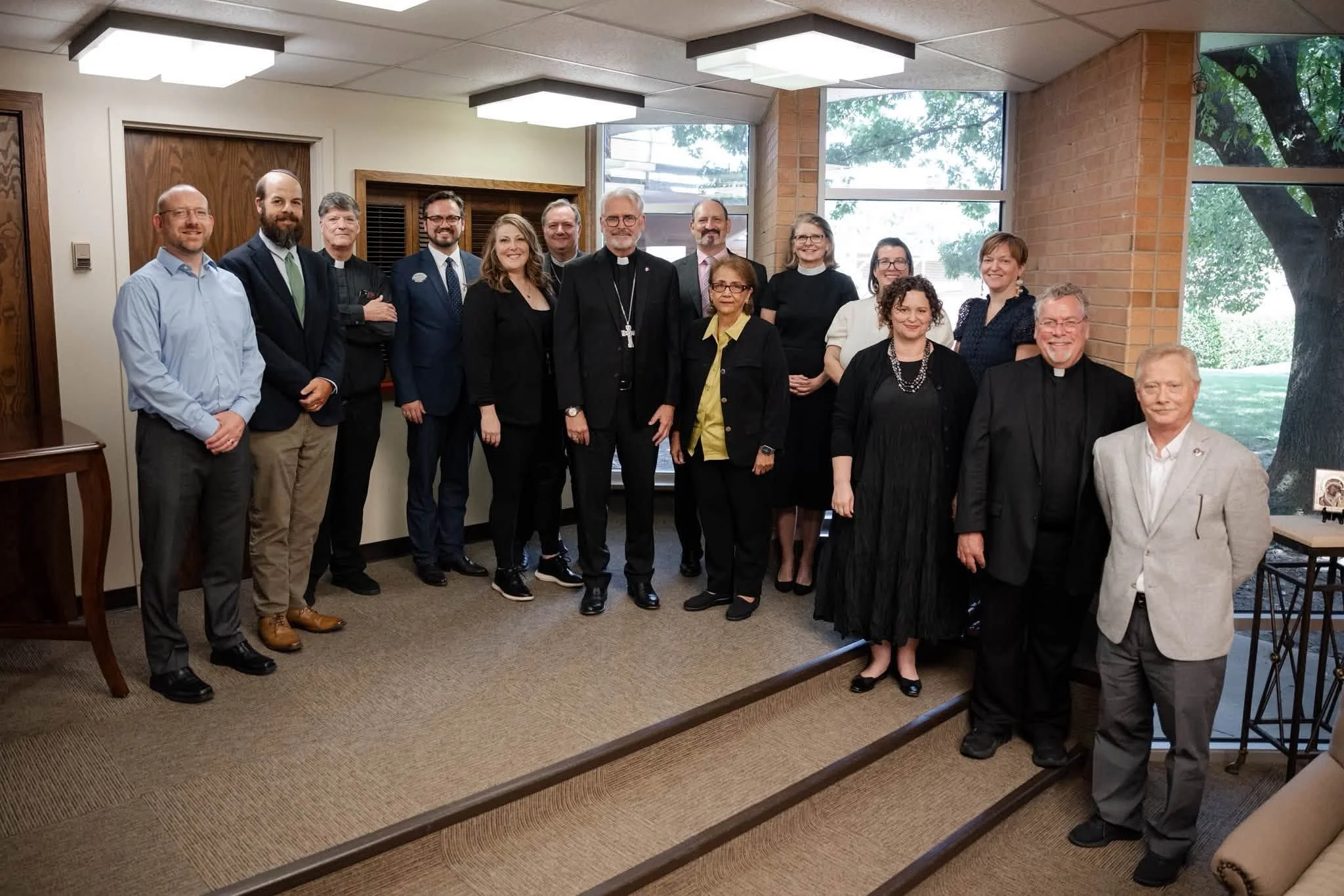
Last week was another example of ecumenical (and interfaith) connection, as Canon Betsy and I were invited to a meeting of 10 different faith traditions, hosted by Archbishop Coakley at the pastoral offices of the Roman Catholic Archdiocese of Oklahoma City. The meeting was prompted by two groups, Voice OKC and Action in Tulsa, with a goal of building relationships and seeking common ground around immigration issues. Although not every religious group was represented, this was the most religiously diverse group of Oklahoma judicatory leaders (diocesan level) in a meeting together since I’ve been Bishop.
It’s easy to get cynical about ecumenical work. With the rise of nondenominational churches and bitter political partisanship, and the decline of mainline denominations, ecumenism might seem like a relic of a bygone and more idealistic era. But I was encouraged by last week’s meeting. Across many theological and other differences, there was strong agreement not only on supporting immigrants and their human dignity, but also on finding more areas to focus on for the common good in Oklahoma. When many religious leaders speak with one voice on something, it is more likely to be heard than each of us speaking individually.
Ecumenism is not only something to be pursued at the diocesan and denominational levels. In my Sunday visits lately, I’ve been encouraging our congregations to reach out to local churches from other denominations. While our “official” partnerships are closest with the Lutherans and Methodists, there are many ways in which our congregations can partner with other churches, for example in outreach, social gatherings, and even formation and ecumenical prayer. We don’t have to agree on everything to work together on something. When Saint Paul speaks of the “whole body, joined and knitted together” (Ephesians 4:16), he means all the baptized. That is both a reminder and a call.